Far be it from me to admit to any sort of midlife crisis event, but recently I, a man approaching his mid-40s with grace and superb mental health, have recently been playing some computer games that have reconnected me with my youth immersed in my local and the international punk scene, playing in a band and generally enjoying a life that revolved around music. It’s been really fun, and the games have some great music too. Let’s talk about them.

SCG
Back in June, when I was in Copenhagen with a few friends for Nasty Cut Fest (a small DIY punk festival that I might still write about – it was awesome fun), an email dropped into my inbox:
I first stumbled upon your fanfiction when I read your story about the Inquisitors, who only exist as a footnote in the X-COM timeline, on Fanfiction.net back in 2001 or so. I collect old websites and online works and host them on my own website. Would you be open to allowing me to re-publish your X-COM fanfics on my own? Or is there a chance you might repost your fanfics on your current website?
Suffice to say this wasn’t an email I’d expected to receive – ever. I responded saying that I’d be happy for the stories to be re-published, and was touched to learn that they were “in any way remembered”.
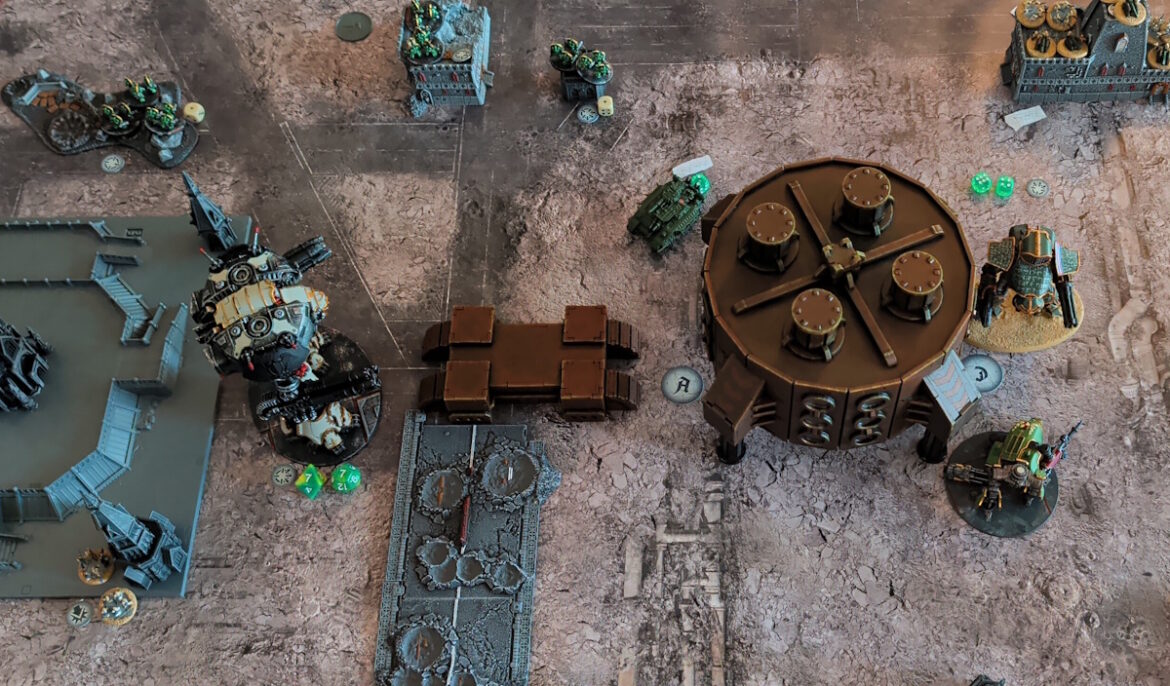
I recently had the great pleasure to play another game of Legions Imperialis; I’ve written about some previous games here. This time I brought what I expected to be a decidedly unbalanced and thoroughly uncompetitive, but hopefully fun and destructive, 2000pt list.
These very short stories were written for the May SFF Chronicle forums writing challenges. Ludictaur was written for the 75 word challenge, for which the theme was “games”. Unfortunately I then neglected to submit the story in time. Time Clops was written for a 100 word challenge for which the cue was “time warp with a horse”. Unfortunately after editing the story down to the word count, I realised that I had mistakenly used a cue from 2020, instead of the current one from 2026.
Yes, I also failed to submit any of my stories on time in April. Yes, I am aware that I am a big fucking idiot. I hope you enjoy these nonetheless.
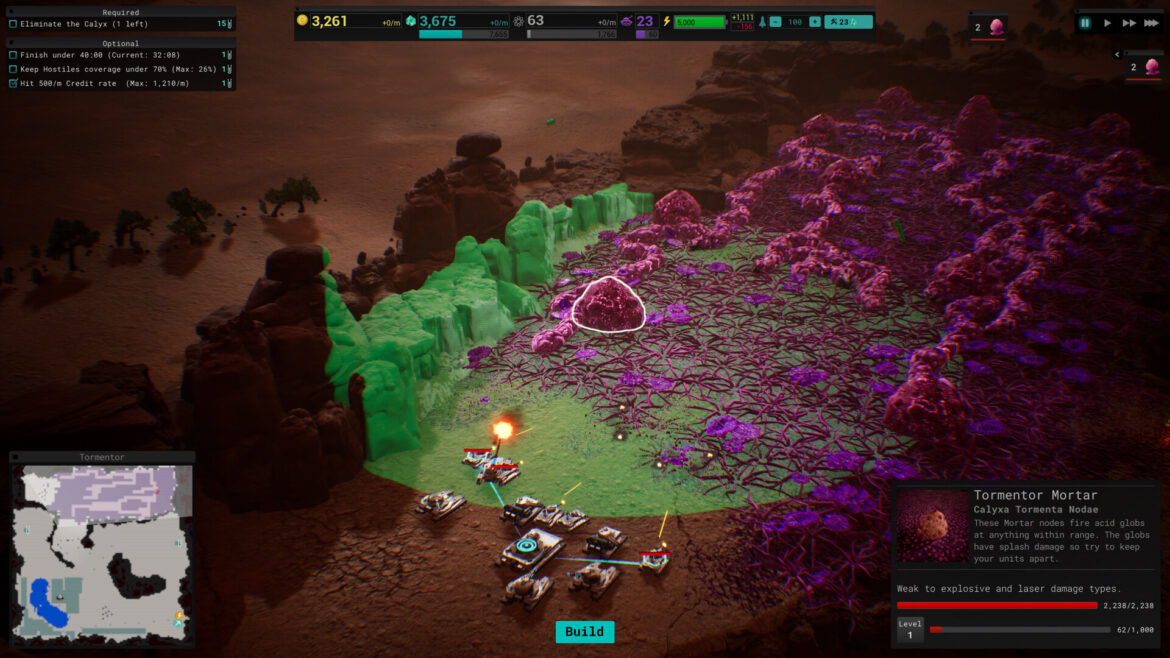
Calyx – the name comes from the Greek term for a husk or seed pod – is a real-time strategy game where the twist is that you’re not fighting against a mirror of yourself, constructing sprawling bases and churning out deathblobs of units to smash together, nor even fighting asymmetric opponents with different types of units and abilities, but rather you are fighting the creeping growth of plant life that spreads out across the map.
Naturally, given that it is the year 2026 and all humanity’s sins are brazenly on display, our species is not covering itself in glory here. The plot is fun: in essence, a slower than light starship with its crew in stasis has reached its destination, and most of the ship and crew are pretty fucked, thanks for asking. The one survivor is the chef, who the ship’s AI immediately rockets down toward the planet to start beginning mining operations. Because why else would anyone travel, really, other than to gather delicious, colourful mineral ore?
These very short stories were written for the April SFF Chronicle forums writing challenges. God of Loamwas written for the 300 word challenge, for which the cue is an inspiration image, in this case the ram’s skull photograph above. Rabbitand Respawnwere both written for the 75 word challenge, for which the theme was “resurrection”. I wrote all three of these near the beginning of the month, intending to return to them, polish or rewrite, then submit nearer the deadline. Being me, I missed the deadline entirely. Oops. Maybe next month!
The Shrine Anchorite is what got me interested in Trench Crusade.
Well, that’s not strictly true. What got me interested in Trench Crusade was the basic conceit – the Knights Templar open a portal to hell, its legions march forth, fast forward a few centuries to the modern era and you have the colossal tragedy of industrial trench warfare coupled with a world war against the arrayed forces of hell. That drew me in, and the art of Mike Franchina cemented the concept in my brain.
Especially the Anchorite Shrine. It is a walking gothic cathedral piloted by a mad saint. It is the most Warhammer non-warhammer thing. I love it. It is my clanking, industrial-religious behemoth of a son.
Subtitled ‘Ten maps that tell you everything you need to know about global politics’, Prisoners of Geography was first published in 2015 and reissued in 2025 in a new edition. What I have in my hands is the 2015 edition, as this is what my father enthused about on my last visit. I was – pleasantly – surprised to hear him speak of the mess European colonial powers had made in drawing arbitrary lines on maps, so I decided to give the book a go.
It is certainly a page turner and an engaging, accessible on politics and history. It is authored by Tim Marshall, a broadcaster and journalist most known for his career with Sky News, who has also contributed to the BBC and LBC. If your interests intersect with history, geopolitics, sociography or current affairs, and you are not yourself an expert in any of these fields, this book will be of interest. It is a New York Times and Sunday Times bestseller, and on flying back home after visiting my parents I spotted the new edition in the top ten racks of the airport book shop. It is clearly still selling well.
If you want to read the story of how and why I switched over to Linux, check this previous post. Today I’m mostly going to share some general thoughts on the operating system, and then get into details on some of the stuff I installed or configured on it. This includes efforts to achieve parity with what I had on Windows, as well as some new stuff I hadn’t done before.
Overview
I’ll kick off by saying that I think the distro I picked, Bazzite, is great.
Its ‘immutable’ nature includes good guardrails to prevent enthusiastic amateurs breaking their OS, but you will still find yourself able to follow various guides that involve e.g. use of the Terminal and grasping new technical concepts, which is a great way to dip toes into the Linux waters.
The OS is clean and performant, and the basic GUI layout – taskbar, ‘start’ menu, desktop etc – will be familiar to Windows users, especially those who long for earlier eras where Windows could be cleaner and simpler. A wide range of software can be installed with a few clicks from the Bazaar, a frontend you can search or just browse categories in.
Moving away from Windows OS has been on the cards for a while now. Microsoft are a prominent fixture on the BDS consumer boycott list, for one. They’re also major players in the ongoing insane genAI / data centre arms race, that joyous economic bubble and source of negative ecological impact at precisely the historic juncture where human civilisation needs it least. Even from a base consumer perspective, they’ve been blasting themselves in the foot with both barrels for some time, between the strategic decisions with their Xbox gaming division and their closure of beloved, sometimes only recently acquired, games studios (they are not the worst offenders in the M&A insanities of the past decade in the games industry, though this is a low bar).
There’s also the small issue that my PC, which has been happily running Windows 10 for some years, does not and cannot support Windows 11. Another of Microsoft’s strategic decisions has been to cut support for Windows 10 earlier than they have for any other OS with its market share. Thanks, dickheads. And it’s not as if I was keen on Win11 anyway, as it looks like a bloated, AI-infested, data-harvesting, always-online, MS-account-centred cesspit.